


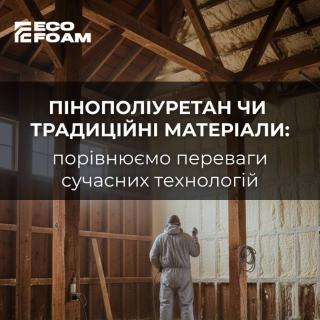
Are you hesitating about which insulation material to choose?
Let's compare sprayed polyurethane foam (PUF) and traditional materials (mineral wool, polystyrene, extruded polystyrene foam) according to key criteria
1. THERMAL CONDUCTIVITY
- PPU: has better thermal insulation properties, which allows the use of a thinner layer of material
Traditional: less effective thermal insulation, so a thicker layer of insulation is required
2. SEAMLESSNESS
- PPU: creates a continuous coating without joints, which guarantees the absence of cold bridges
Traditional: joints between slabs create cold bridges, which reduces insulation efficiency
3. ADHESION TO SURFACES
- PPU: high adhesion – applied to any materials without additional fastening
Traditional: require mechanical fastening or adhesive
4. RESISTANCE TO BIOLOGICAL FACTORS
- PU foam: does not rot, is not prone to fungus and does not attract rodents
Traditional: can accumulate moisture, creating conditions for mold and mildew
5. MOISTURE PROTECTION
- PPU: does not absorb moisture, forming a waterproofing layer
Traditional: mineral wool absorbs moisture, which significantly worsens its thermal insulation properties
6. INSTALLATION
- PPU: quick application, because in a day you can insulate a building up to 300 sq. m.
Traditional: a long installation process that requires additional fasteners
7. MECHANICAL STRENGTH AND DURABILITY
- PPU: has high resistance to mechanical damage, does not sag over time, does not crumble and retains its properties for 30+ years
Traditional: mineral wool is soft and prone to shrinkage and deformation, while polystyrene is fragile and easily breaks under mechanical stress.
If you are looking for durable insulation with high hydro- and thermal insulation, PPU is a much more effective solution.
Do you need a system selection for your facilities?
Write to DIRECT or call +38 (098) 183 59 00 — consultation and technical selection