Cercospora: how to preserve the leaf apparatus and not lose the crop?
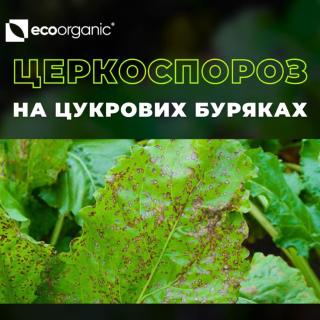
Cercosporosis is one of the most common and underestimated fungal diseases that affects not only beets, but also soybeans, corn, grapes, sorghum and other crops. It causes the appearance of characteristic brown spots with dry centers on the leaves. And if you do not intervene in time, the leaves die, the ability to photosynthesize is lost, and the yield drops sharply.
In some regions, beet losses reach 7.5 t/ha, and this is only the official statistics. Cercospora is an insidious enemy, as it often “hides” behind other stresses and is not always noticed in the early stages.
A feature of the pathogen is its high resistance. This means that fungicidal treatments become less effective every year, and the damage from the disease increases.
How to act effectively?
In the fight against cercosporosis, the combination of fungicide with foliar feeding has proven effective:
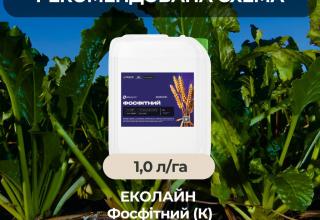
- ECOLINE Phosphite (K) - 1.0 l/ha
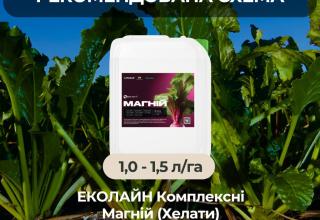
- ECOLINE Magnesium (Chelates) – 1.0–1.5 l/ha
What does this give?
- Phosphorus in the form of phosphite has not only a nutritional but also a fungistatic effect - it blocks the development of pathogens of the oomycete class, including cercospores.
- Activates the synthesis of phytoalexins, natural protective compounds that strengthen plant immunity.
- No resistance to phosphites was detected - this is an important advantage in a season of frequent treatments.
- Magnesium in chelated form is a key element for supporting photosynthesis and energy production, which is critical in conditions of damaged leaves.
The result is a functioning leaf apparatus, healthy crop development, and minimal crop losses.